Author: allthingspups

The Single Tip That Will Help You Prevent 90% Of Puppy Issues
San Diego Dog Training

Here's a reality check for you: getting a new dog isn't always sunshine and rainbows!


While successfully raising a dog is arguably one of the most fulfilling events in the life of an animal lover, it can also be a nightmare if you don't know what you're doing.


That's where I come in 🙂


One of the most common cries for help that I get are puppy owners who come to me saying that they are encountering issues with their puppy having accidents in the house or chewing on the furniture/household items.


My first question to these dog owners always is: Did you catch your dog in the act?


Often times, the owner will say that they did NOT see the puppy in the act and that the puppy did it when they were in another room.


And I always tell these owners that this is the mistake…


You have to be watching a puppy at ALL times early on in order to teach the puppy what is right and what is wrong.


all things pups

A puppy does not remember what he did a few minutes ago, so you HAVE to catch him in the act to correct a behavior.


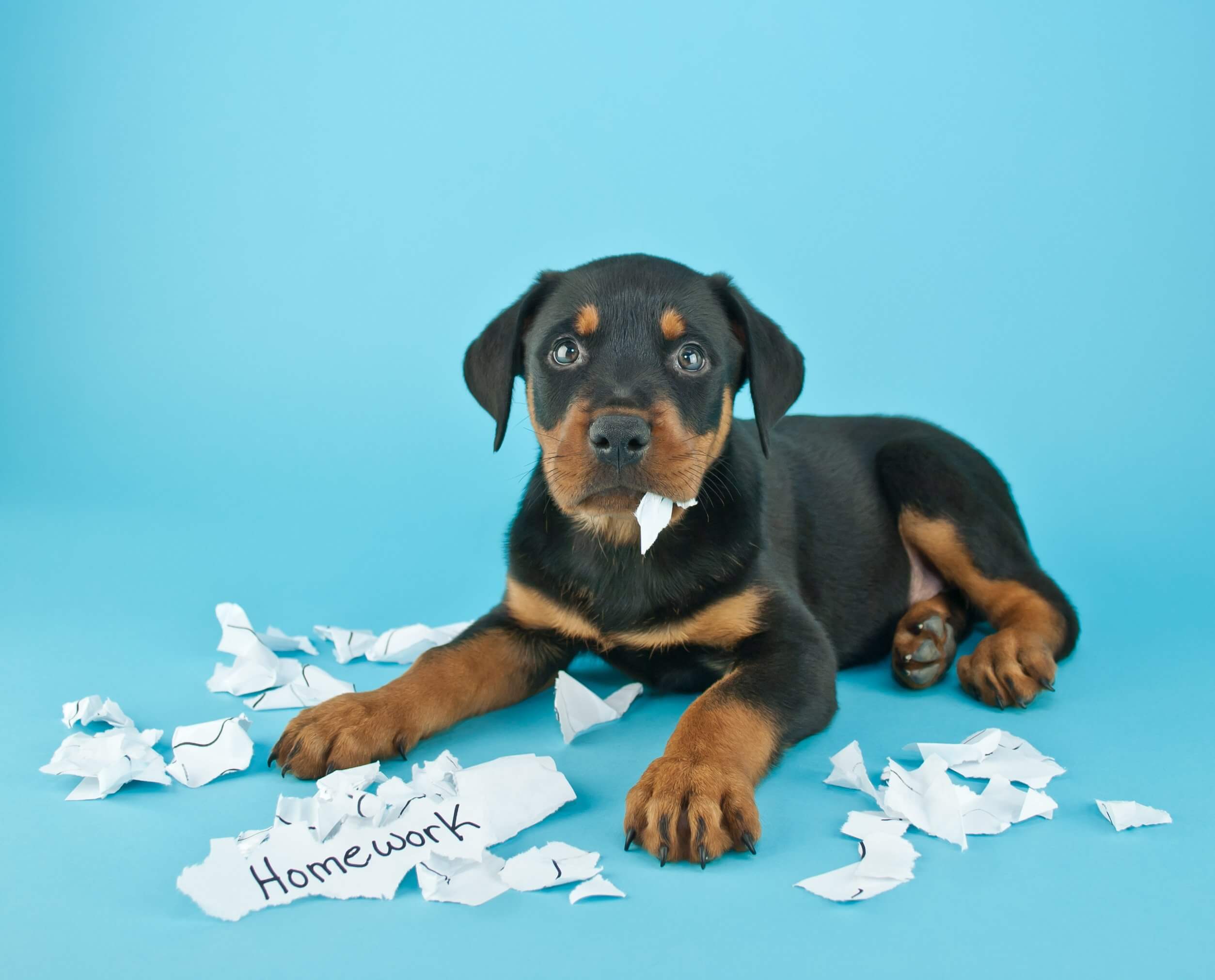
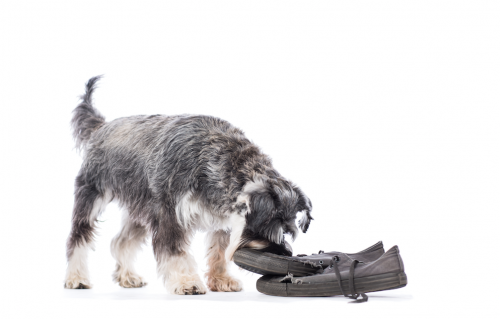
If your puppy chews up your socks, and then you try to correct him 20 minutes later after you discover the socks, then your pup isn't going to make the connection when you redirect him to the appropriate chewing object.


While I don't expect you (or anyone) to constantly monitor your dog 24/7, like an overbearing parent tracking their child's every move, there needs to be a clear understanding of what is and isn't appropriate behavior from the start.
all things pups

This is why instead of giving your pup complete free roam immediately, I recommend that you use a few important training tools to ease into giving them more of your trust to explore on their own.


Whether it takes two days or two weeks to gain this trust, it all starts with conscious awareness of where your puppy is located, and what they are doing at all times.


With all of this in mind, one of the biggest pieces of advice I can give to new puppy owners is:


You must have your eyes on your puppy AT ALL TIMES.


If you can’t have both eyes on your pup, your pup needs to be in an enclosed place such as their crate or a gated off room.


Many puppy owners “feel bad” for putting their pup in an enclosed space and thus, allow their puppy to have way too much freedom around the house.


What's wrong with allowing my pup to have free roam?


Well, when you allow your puppy to roam around everywhere, the puppy has no limits, and will take full advantage of this freedom. With an untrained puppy, that is simply a recipe for disaster. How so?


Well think of it like this, would you let your baby crawl around the house without watching them? I hope you answered no... a considerable number of negative outcomes immediately come to mind!


It’s no different with your puppy, as letting your puppy have too much free roam encourages your curious little fluff ball to explore their new world without boundaries, which often leads to naughty actions such as destroying objects in the house and/or having accidents.


This is NOT the way to establish yourself as their pack leader.
all things pups

What should I do if I can't monitor my puppy at all times?


If you are in a situation where you are not able to have both eyes on your pup, this doesn't mean that you should let them do as he pleases!


Instead, your pup must be placed in a restricted area where he will not be able to get into anything.


Having this small, enclosed area of their own is actually very beneficial for dogs and helps immensely in the training process.


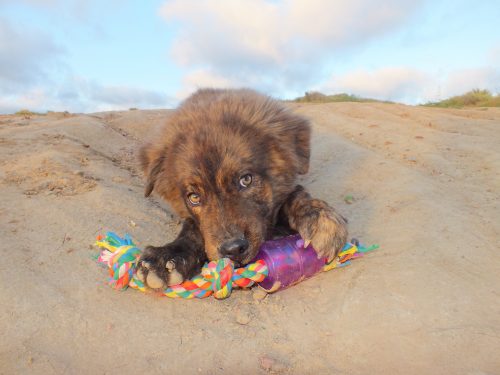
Associate the enclosed area with positivity by feeding your pup, giving him or her treats, chewing objects, and anything else your puppy loves while your pup is in his or her “den”.


This area is amazing for your puppy to have a break with his or her favorite things, it will help with training, AND you can actually take a break from worrying about something getting destroyed or your pup having an accident! It is a total win-win 🙂


If you’re reading this after you’re already encountering issues with your dog, don’t worry! I’ve got you covered:


If you’re already having a lot of trouble with your puppy chewing on things while roaming around the house, here’s a detailed article on 3 simple steps that will help you correct this behavior.


And for issues with potty training and accidents, here’s a blog on how to respond to your dog’s accident.


With that being said, you can possess all the tools and training knowledge in the world, but if you aren’t constantly monitoring your puppy so that you can catch him in the act, then you’ll miss the opportunity to turn a frustrating situation into a valuable learning experience for your pup.


Remember to keep your eyes on the prize!

Sign up now for the All Things Pups newsletter to get amazing gifts, dog training tips, discounts, and advice straight to your inbox for FREE!

Stop Using This Item If You Care About Your Dog's Safety

your dog's safety

Whether you’re a new dog owner or a seasoned vet, there’s certain situations, behaviors and even items that can be a danger to your dog’s safety.


While most of what we talk about on this blog consists of tips on how to raise and train a well-behaved and obedient dog, my mission is to give you everything that you would possibly need to know about dog ownership, all in one place!


With that goal in mind, I would really be doing you a disservice if I failed to inform you that there’s certain products out there that you must be very weary of.


Although this item that we're going to talk about today is becoming less popular as dog owners gradually become more educated about dog safety, I still see new dog owners using it ALL the time.


This item can endanger your dog’s health as well as his life, and can seriously injure YOU as well.


What is this dangerous item?


It is… a retractable leash.


I strongly discourage dog owners from using retractable leashes.


In case you haven't seen one before, retractable leashes are the leashes with large plastic handles that retract very long nylon cords.


These leashes aren’t beneficial in training your dog whatsoever and actually can be very harmful to you and your pup.


I can’t even begin to tell you how many horror stories I’ve heard about people injuring themselves or their dogs when using this type of leash. Unfortunately, many dog owners have not been educated about the dangers of using these leashes and they are still popular today.


Reasons why I strongly discourage using a retractable leash:


1. It is a horrible tool to train your dog how to properly walk on a leash


Retractable leashes are confusing for dogs because the distance they are allowed to go is always changing.


Your dog (especially puppies) will be very inclined to test the leash to see how far he is able to go, which will end up encouraging him to pull.


2. It allows way too much freedom for the dog to roam while on leash


Leash walking should train your pup to stay close to you. The retractable leash defeats the purpose of leash training entirely, and instead, encourages unwanted behaviors, such as pulling and zig zagging.


3. Retractable leashes can be dangerous for YOU


It is incredibly common to hear of people that have gotten rope burn or sliced hands from attempting to grab onto a retractable leash.


When your dog is running away and you try to grab the leash to stop your dog, the tiny nylon cord can slice into your skin (ouch!) and it’s extremely painful!


4. Retractable leashes can be dangerous for YOUR PUP.


There are a few horrible outcomes that can result from a retractable leash accident. The first and most common outcome is that your puppy can easily get tangled up in the cord.


Some people may object and say, “Well this could happen with any leash”.


While this could certainly happen with any leash, the chances are much greater that the damages made by a retractable leash tangle will break skin, or even be fatal.


For instance, if your pup gets tangled up in a retractable leash and then tries pull away, it will cause the rope to tighten even more, which can easily lead to lacerations when the pulling is exerted with great force.


If this type of leash gets tangled around the dog’s neck, and the dog panics, it can be fatal.


For these reasons I strongly suggest you stay FAR away from retractable leashes.


For a list of the items I DO recommend, check out my blog post—or even better, check out “The Puppy Training Handbook” for a complete guide on every item you’ll need to get (and what to stay away from).


This comprehensive book will give you all the tools and knowledge you need to raise and train your new puppy into the dog of your dreams!


Sign up now for the All Things Pups newsletter to get amazing gifts, dog training tips, discounts, and advice straight to your inbox for FREE!

5 Reasons Why You Should Never Free Feed Your Pup

5 Reasons Why You Should Never Free Feed Your Pup

As a new dog owner, you are probably doing tons and tons of research to ensure that you are raising your dog in the best way possible.


This is great! As you've probably found out, one of the most important factors to raising a healthy dog is their nutrition.


You may have even searched “the best type of dog food,” or something along those lines as you've gone about educating yourself.


However, what most new dog owners do not know is that what you feed your dog is just as important as the way you feed your dog.


I'm going to repeat this point again to reiterate its importance: what you feed your dog is just as important as the way you feed your dog!


What feeding strategies are there for you to choose from?


There are 3 main ways that you can choose to feed your dog:


1. Free Feed (aka Choice Feeding)


Free feeding is simply the act of leaving food out for a dog so that the food is available at all times and the dog chooses to eat whenever he or she wants.


2. Portion Limited


Owner gives the dog a specific portion of food and the dog chooses to eat it whenever he or she wants.


3. Time Limited


Owner gives the dog a specific portion of food for only a certain amount of time and takes the food away from the dog after the time is up, giving the dog only a small window of time to eat the food.


Now, with these three choices in mind, depending on the dog, either portion limited or time limited feeding may work best as a feeding method. With that being said, I am going to elaborate on why free feeding should never be the way you feed your dog.


Despite what you may read on (often) uncredible internet sources, and what you may hear from people who say you should free feed your puppy so he “gets as much food as he needs”, please be advised that this advice is detrimental to your ability to effectively train your puppy, and to foster a healthy maturation process for them.


Why?


The simple answer is that free feeding isn’t beneficial for your puppy’s health, or for you in establishing a potty routine for your pup.


Yes, free feeding is the easiest and most convenient option for dog owners. However, the easiest method typically does not correlate with being the best method, and in this case, that couldn’t be any more true.


Still not convinced? Challenge accepted.


Here are 5 concrete reasons why you shouldn’t free feed your puppy:


1. It puts your puppy at risk of becoming overweight


Many puppies have eyes that are larger than their stomachs.


When Juneau was a puppy, I swear she would have eaten the whole bag in one meal if I would have let her!


Puppies typically do not have the self control to tell themselves: “Ok, I am full. Stop eating.” They will eat and eat and eat! Often times, dogs, just like humans, will eat when they are simply bored.


This can lead to obesity and as I am sure you know, obesity can lead to serious health issues.


2. When food is always available in the crate, it makes the food and the crate much less appealing


One of the key points that I teach to properly crate train your pup and associate his or her crate with positivity is to feed your puppy his meals in the crate.


For owners who choose to free fed their pup, it can drastically upset this important step in the foundational stages of dog training.


How so?


Think about the situation like this. If something is always present and available to you, it makes it much less appealing, and you probably aren’t going to want it as often—even if it's something that you typically love.


For example, if your favorite meal on Earth is pizza, and you had access to a pizza buffet 24 hours a day, 365 days a year, I almost guarantee that the pizza would become less appealing after a few days (I realize that some people reading this may think not, but trust me, nobody is that pizza obsessed).


On the contrary, when something you love (i.e. pizza) is only given to you at certain times, it is just about guaranteed that you will be more excited for it and find it more appealing than in the first scenario.


The same goes for dogs! Free feeding allows for the dog to have access to the food at all times, making the food less appealing.


However, if you only feed your dog in the crate at certain times of the day, and do not allow your dog to free feed at their convenience, he or she will look forward to going into the crate to eat and will be more excited about the food!


You want your puppy to get excited for meal time and to get excited about going into the crate in order to eat. Win-win!


3. It prevents you from keeping track of how much you are feeding your puppy at each meal to ensure the puppy is getting the right amount to meet his nutritional needs.


For people serious about their puppy’s health, free feeding makes things a lot more stressful and unorganized, because you aren’t able to monitor how much your puppy is eating.


For instance, if you end up having to cut down on your puppy’s food intake due to a health reason, how will you know how much your puppy has to be fed now when you are free feeding him?


When you are free feeding, this conundrum leaves you in a very tough position.


4. It will most likely lead to more accidents in the house


Why?


Well think about it— when your puppy has a routine including timely feeds, you know that you can expect your puppy to have to poop about 30 minutes to an hour after eating.


However, if your puppy is constantly eating while being free fed, you will not know when exactly he needs to go out, which will lead to A LOT more accidents in the house.


5. It sacrifices your ability to monitor your puppy’s healthy habits.


One might ask, how so?


When your dog is not eating, it should be a blatant red flag to you as a dog owner; loss of appetite is one of the best indicators of illness in dogs.


However, when you are free feeding your puppy, you can’t really tell if your puppy skipped lunch that day or not.


Since I regulate my dogs’ portions, if one of my dogs ever skips a meal, I am immediately on high alert of watching for any other symptoms of them not feeling well, because it is very abnormal for my dogs to not be excited about their food at every meal.


However, I would've never been aware of this fact if I left a consistent mound of food available for my dogs at all times.


BONUS point:


A bonus point for why you shouldn't free feed your pup is that it's incredibly expensive to do so!


If you're feeding your dog high quality food (which you should be), this doesn't come at a cheap price!


Therefore, on top of the detrimental health and training consequences described above, free feeding your pup will also lead to significantly higher food costs over the duration of your dog’s life.


Ultimately, when it comes down to it, all of these reasons come back to validate the point that your puppy needs to have balanced meals in order to stay healthy, happy, and well-trained!


As you move forward on your puppy parenthood journey, experiment with limiting your dog’s portions, feeding times, or both, until you find the feeding plan that works best for your specific pup.

Sign up now for the All Things Pups newsletter to get amazing gifts, dog training tips, discounts, and advice straight to your inbox for FREE!

Why Socializing Your Dog Is Crucial For Their Well-Being

socializing your dog

When you think about the necessities of a dog’s life, what comes to mind?


Probably something along the lines of: food, water, exercise, vaccines, and preventative medications. For the most part, you’d be right.


However, there is a key component of this list, that so many dog owners forget, and that is…


...socialization!


Yes, socialization is a NECESSITY! Socialization is extremely important to a dog’s entire well-being and health for a number of reasons.


Before I get into exactly why socialization is so important, let me briefly define it for you, and what a 'socialized' dog acts like, so that you can determine where your dog lies on the socialization spectrum.


What exactly is socialization?


Socialization in dog language means exposing your dog to as many new situations, environments, objects, people, dogs, and other animals as possible.


Socialization is especially crucial during puppyhood so that the puppy develops the proper socialization skills that he will have for the rest of his life.


However, it is also very important to remember that socialization should not stop after puppyhood—in fact, your dog should be constantly socialized for his entire life!


Introducing your dog to new experiences helps him to feel more comfortable every time he is exposed to new situations.


Due to this fact, socialization gives dogs the ability to learn how to cope with new experiences and situations in a positive way.


What defines a 'socialized' dog?


Socialized dogs tend to be happy, friendly, and very well-balanced. Under socialized dogs are typically fearful, anxious, and have a number of behavioral issues, including aggression.


Your dog will be exposed to all kinds of new things throughout his life, but it is VERY important that you, as the owner, make these new experiences positive.


The number one reason that dogs have behavioral issues later on is due to lack of positive socialization.


Owners have a hard time letting dogs just be dogs, and because of this, these dogs end up being under socialized and develop lingering behavioral issues.


The Importance Of Dog Socialization


It is absolutely imperative that your dog socializes with other dogs if you want him to get along with other dogs.


Aside from the other reasons described above, you need to allow him to play and socialize with other dogs to show him that other dogs are a fun and positive thing.


While this may sound like common sense, many dog owners find themselves with a five month or five year old dog who isn’t good with other dogs.


How does this happen?


Many dogs who have behavioral issues with other dogs most likely were not socialized with other dogs properly during puppyhood.


Socialization starts the moment when a puppy is born, as puppies begin to socialize with their moms and their litter mates.


Once a puppy goes to his forever home (typically at 8 weeks old), socialization needs to continue at an even greater rate.


Introducing your dog to as many different kinds of dogs as possible will help your dog get to know that every dog is different, but still okay to be friendly with.


Let your puppy play with other dogs and develop the proper socialization of what kind of play is appropriate.


Dogs need to play with one another to feel each other out, adapt to one another, and learn what appropriate play is at a young age.


If an owner doesn’t allow their dog to go through this exploratory process at a young age, the dog becomes much more averse to displaying inappropriate or even dangerous behaviors towards other dogs or people.


However, even if your dog is behind in his socialization skills, don’t think that he can’t learn!


While it certainly will be tougher to socialize a five year old dog as opposed to a five month old puppy, it’s never too late to start!


In fact, the longer you put it off, the worse the behaviors will become, and the deeper these habits will become entrenched in their predisposed reactions.


How To Begin Socializing Your Dog


Start off by letting your dog say hi to other dogs of every kind. I hear people say, “I’m never going to let Fluffy near pitbulls.”


For one, I could go on forever about how the stereotypes of pitbulls are incredibly inaccurate. However, for this topic, I will stress the fact that by making this particular comment, and following through with the actions of never allowing your dog near a certain breed, you are setting your dog up to have behavioral issues.


Let your dog be a dog and socialize with whatever other dog he pleases!


Quite often actually, on walks with my dogs, I will see someone walking their small dog coming towards me.


Keep in mind, the dogs are doing nothing but walking very well on leash, yet the owner feels the need to pick up their dog to “protect” him from my larger dogs.


My dogs are actually very friendly with small dogs, and would have loved to say hi and keep walking.


By taking away this opportunity for socialization, this owner is setting their small dog up to have behavioral issues with large dogs by not allowing him to just be a dog and figure out socialization on his own.


No matter your dogs age, they will need to figure out how to play with other dogs. They will play with their litter mates, but often times litter mates play very rough with each other, so dogs need to learn how to play nicely with others.


Allow your dog to play with other dogs to figure out what kind of play is appropriate, and how to play nicely, but it is also your job to supervise and make sure that your dog is socializing properly.


Allowing your dog to play too rough is teaching your dog that it is ok to socialize with other dogs in that inappropriate way, even when the other dog doesn’t like it.


This negative socialization can also result in the dog having behavioral issues, so it is very important that you are PROPERLY and POSITIVELY socializing your dog with other dogs.


If your dog is older and has not been properly socialized yet, make sure that you ease your dog into this process, and be very aware of any stress signals he indicates.


Socializing With People


We all know that people come in all different shapes and sizes. It is important for dogs to understand this as well.


Introducing your puppy or grown dog to as many different people as you can will allow him to understand this early on (hopefully) and be friendly towards all people.


Let your dog sniff people out and say hello!


Keeping your dog from allowing other people to say hi and pet him will only set your dog up for having issues with people later on.


Some dogs have issues with people wearing things such as sunglasses or hats, so expose your dog to these things and everything other possible negative stimuli right away, so that he is familiar with everything later on.


Dogs who aren’t familiar with certain people or people wearing certain things, may be fearful or aggressive towards them.


Exposure to New Situations and Locations


You want your dog to know that there is more out there than his backyard, and everything he sees on your walking route.


Don’t you want to be able to take your dog anywhere and know that he will be comfortable and well-behaved?


Taking your puppy to as many new locations and exposing him to different situations will help him develop the skills to cope with being introduced to new situations.


Your dog should enjoy and be curious during new situations.


Allow him to explore what else is out there, so that when you do take him to a new place, he is happy and comfortable, rather than fearful and uncomfortable because he isn’t use to new things.


As you expose your dog to as many new experiences as you possibly can, remember that it is crucial for your dog to have socialization in order to be a well-balanced pup.


Also keep in mind that socialization is most critical at puppyhood, but should continue throughout the dog’s entire life, and that it’s never too late to start!


For more in-depth tools on how to solve all of the behavioral problems that may arise from an incorrectly socialized dog in one resource, check out “The Puppy Training Handbook” Program!

Sign up now for the All Things Pups newsletter to get amazing gifts, dog training tips, discounts, and advice straight to your inbox for FREE!

3 Simple Steps To Stop Destructive Chewing

stop destructive chewing

Puppies love and need to chew. As a new puppy owner, you have probably found this out the hard way—finding your favorite pair of shoes destroyed or realizing that your pup has been making it 'snow' after gnawing the stuffing out of the couch.


               stop destructive chewing


So first of all, why do puppies feel the need to chew on everything?


While you might think that your puppy has set out to make your life a living hell, they actually have better reasons to chew than to simply add to your daily drama. There are a few key reasons for puppy chewing habits:


- Puppies, like human babies, chew when they are teething; therefore, the chewing of objects soothes their gums.


- Also, like babies, puppies put objects in their mouths to figure out what the object is, and what to do with it.


- Finally, puppies may also chew when they are bored or have a lot of energy.


Because of the reasons listed above, dogs actually have a need for chewing, just as they have for sleeping, eating, etc.


Your dog needs to and is going to chew. However, no matter your dog's age (although you may think otherwise at this point), the good news is that you CAN control what your pup chews on and does not chew on.


To do this, you simply have to teach your puppy what is appropriate to chew on and what is not appropriate to chew on.


While puppy chewing is extremely important, if not corrected in the puppy stages, this natural tendency can turn into a truly detrimental behavioral problem when not properly monitored.


How does one go about stopping destructive chewing? Here’s your plan of action:

all things pups

1. Be sure that you have appropriate chewing objects available for your pup.


We have established that dogs have a need to chew and are going to chew no matter what.


With that in mind, you need to provide them with chewing items that are appropriate for them to chew on.


There are a lot of different types of acceptable chewing items for dogs.


Chewing items are essential for puppies, as dogs actually have a need for chewing, just as they have for eating, exercising, etc.


Also, chewing objects benefit the health of your puppy’s teeth and gums and can provide your puppy with healthy minerals.


Here are the chewing items that I recommend:


Antlers


Antlers are one of the most amazing chewing object for dogs. They are full of vitamins and minerals, they are natural, and they last FOREVER (‘Forever’ in dog language, meaning a few months). 

Why are they so great?


For one, they are much safer than any other chewing item because they are a lot less likely to break off into pieces or splinter.


In addition, antlers will keep your pup busy for a long time, while providing him with health benefits. Antlers are a little bit more pricey, but I promise you they are worth it.


Bully Sticks


Bully sticks are another great chewing object to have at your disposal. They don’t last nearly as long as antlers, but last quite a bit longer than other chewing treats.


They have a very strong odor which makes dogs love them. They will only last a day or two, but will keep your puppy busy for a little while.


They are also natural and also full of vitamins and minerals for your pup.


Kongs


Kongs are a great chewing object for puppies!


You can fill them with food and all kinds of goodies your dog will love! I like to fill my pup’s with peanut butter and mix in some of his food and then freeze it for a couple hours before giving it to him.


The frozen treat will last much longer, and the coolness feels great on your pup’s gums and teeth!


However, there are also some marketed chewing items that I advise you to stay far away from:


Cooked Bones


Despite common belief, bones are very dangerous for dogs.


Bones, especially cooked, can splinter very easily, which can cause an irreparable amount of damage to your puppy.


The splintered bones can get lodged in your puppy’s esophagus or severely injure the stomach.


A puppy who has splintered bones in your his body will most likely need surgery to remove them. Not fun!


Rawhide


You will find rawhide chewing objects at any corporate pet store, like PetSmart or Petco.


It is the most commonly marketed chewing item, but do not let the abundance of it and the low price tag fool you!


What a vast majority of puppy and dog owners DON’T know is that it's very easy for a puppy to bite off a large piece of rawhide and swallow it whole.


This is dangerous because rawhide isn’t digestible for a puppy and can cause gastrointestinal problems or blockage; which means surgery for your puppy and a ridiculously high vet bill coming your way.


There is certainly a risk with anything that your puppy chews, so I suggest closely monitoring your puppy with his chewing items.


Be cautious of the items you are giving your puppy to chew on.


As a general rule of thumb, never give your dog anything that is made outside of the USA. Toxic chemicals have consistently been found on chewing objects for dogs made outside of the United States.


Foreign bones and other items can be deadly to your puppy if he consumes something that is toxic or artificially created.


This plays into the U.S. made distinction, which is important to take into consideration because other countries don’t have nearly as strict regulations as the U.S. when making dog and other animal products.


2. Be very strict with what is appropriate to chew on and what is not.


Do not EVER let your puppy chew on an inappropriate object—not even once... this will only confuse your pup!


Your puppy is just learning right from wrong, so you need to make sure that you are teaching him right from wrong in every area of his life, including what is right to chew on and what is not.


If you are repeatedly telling your puppy to not chew on an inappropriate object, at some point you may think that it is easier to just give up and allow your puppy to chew on the object.


Do not do this!


If you allow your puppy to chew on an inappropriate object, even once, all the progress you had made to that point in teaching him right from wrong chewing objects will be thrown out the window.


Raising a puppy is simply a series of repetitive routines!


It will get annoying having to repeat things a million times, but that is part of raising and training a puppy.


Therefore, you need to be consistent and strict with what is appropriate to chew on and what is not.


Even if it seems as though your puppy will never learn to stop chewing on inappropriate objects, he WILL learn in time as long as you are consistent and patient in consistently guiding him to appropriate chewing behaviors.


3. Redirect your puppy to an appropriate object to chew on.


This is hands down the most important step!


If your puppy does try to chew on an inappropriate object, tell your puppy “NO” and REDIRECT HIM TO THE APPROPRIATE CHEWING OBJECT.


If you don’t redirect your puppy’s attention to an acceptable item, he will continue to find new objects to chew on to satisfy his urge.


Just simply telling your puppy “No” will not teach him anything, which I find to be a mistake in SO many dog owners.


For example, let's say your puppy is chewing on your shoes, you tell him “No”, take the shoes away, and that is it.


Why would your puppy, who has a need to chew, want to stop chewing on your shoes in that situation?


The reality is that he wouldn’t, and he will continue to do it again and again when you approach the situation like this.


Therefore, instead of just telling your puppy “No”, you must REDIRECT him to an appropriate chewing item that will satisfy his need to chew.


Redirection is key to stopping destructive chewing and it is a step that most dog owners never take.


So… yes, you WILL have to be persistent and consistently redirect your puppy to appropriate objects.


But, the more consistent and persistent you are, the faster your puppy will learn and stop those inappropriate chewing habits!


For more detailed information on how to correct destructive behaviors like chewing, plus 19 other inappropriate behavioral problems, check out “The Puppy Training Handbook” Program!

Sign up now for the All Things Pups newsletter to get amazing gifts, dog training tips, discounts, and advice straight to your inbox for FREE!

Is Your Dog Well-Trained Or Well-Behaved?

well behaved or well trained

Recently, my friend got a new Boxer puppy named "Rosie", and she was SO excited for me to meet this puppy so that I could see how amazingly trained the puppy already was.


Little did I know what I was in for...


When I got to my friends house, Rosie was barking when I rang the doorbell and then immediately began jumping up on me when I walked in the door—as a dog trainer/behaviorist, I obviously notice and examine these behaviors more so than most people!


I then let my friend take the reins entirely as she wanted to show me how “well-trained” Rosie is at only 3 months old.


Once Rosie stopped jumping on me, she began chasing the cat around the room.


My friend was very eager to show me everything she had been working on with Rosie, so she called Rosie’s name.


Rosie did not even look back at my friend, and just continued to chase the cat around.


My friend went over to Rosie and tried to grab her, but Rosie then thought it would be fun to play a game of “You can’t catch me.”


I couldn’t help but laugh a little at my friend, who kept telling Rosie to “come” while Rosie was running in circles around her.


So my friend went and grabbed the bag of treats, which immediately got Rosie’s attention.


My friend commanded Rosie to sit, lay down, shake, touch, and wait—and Rosie performed every one of these commands with flying colors.


My friend then said, “Can you believe how well-behaved of a puppy she is?!”


That's when it hit me.. So many people confuse and mix the meanings of 'well-trained' and 'well-behaved.'

all things pups

Just because Rosie is well-trained with the commands my friend taught her, does not mean she is well-behaved.


In fact, I would definitely say that she certainly is not well-behaved AT ALL.


I explained this to my friend the exact same way, and went over all of the behaviors that I had just witnessed from Rosie, which would not be categorized under the title of a “well-behaved” puppy.


We shared some laughs, I got the approval from my friend to write this post, and most importantly, my friend learned to understand the difference between a well-trained puppy and a well-behaved puppy, and how important the latter is.


Now, I am going to give you the same explanation and advice that I gave my friend.


There are so many dog owners who are exactly like my friend—they think that the key to having a well-behaved dog is teaching the dog as many tricks as possible.


Just because your dog knows how to do a variety of tricks in order to obtain a reward, definitely does not mean that your dog is 'well-behaved'.


I am not only a dog trainer, but also, more importantly, a dog behaviorist for this reason.


Anyone can train a dog to do a trick for a treat.


The hard part is understanding their behaviors and how to change them.


As a behaviorist, I am able to understand a dog’s behavior, connect with the dog, and work with the dog in a way that is unique to him to help him achieve the highest level of good behavior that is possible for him.


After separating this distinction between behavior and training, I think that Rosie is the perfect example of a dog who is 'well-trained', but not 'well-behaved'.


Rosie did very well performing her tricks on command, but misbehaved in other areas, such as jumping up on me and not coming when her owner called her.


If I had to choose, I would most certainly choose to have a dog who is 'well-behaved' rather than 'well-trained'.


However.. the good news is you don't have to choose! You can absolutely have a dog who is both 'well-behaved' AND 'well-trained' if you're equipped with the correct skills and knowledge, and put these into action consistently!


However, one of the biggest mistakes that I've seen with my clients is the belief that simply training a dog to perform basic obedience will solve her behavioral issues.


Just because Rosie knows how to shake, does not mean she doesn’t jump up on people.

Naughty Dog all things pups

Where should I start?


First off, you need to focus on having a 'well-behaved' dog before having one that is 'well-trained'.


Rehabilitating your dog and working through unwanted behaviors is the most important, as well as the most difficult part of raising a dog. It is up to you to teach your dog what is appropriate behavior and what is not appropriate in every single area.


A new puppy has so much to learn, so it's important for you to tackle this task of teaching him what is appropriate and what is not immediately!


Focus on getting your dog to listen and respect you, on crate training and potty training, on leash walking, and the appropriate way to interact with other dogs and people before jumping into teaching your dog tricks!


Be very aware of ANY behaviors that your dog displays that you do not want him doing long-term and nip them in the bud immediately.


Many people allow their puppies to exhibit inappropriate behaviors (such as jumping up on people) just because they are only puppies and think that they will grow out of it.


This couldn’t be further from the truth!


The longer you allow your dog to perform a behavior (whether good or bad) the longer he will continue to perform the behavior and the harder it will be to make him stop this behavior.


So... FIRST work towards having an all over well-behaved dog that listens to you and has a solid base of basic obedience before moving into the more advanced tricks and commands. You'll be glad that you did 🙂

---

As a dog behaviorist, I have extensive experience working with dogs who have a variety of behavioral problems, and through my experience, have developed the skills to work with each dog in a unique way, to solve each behavioral issue.


For a comprehensive step-by-step guide on how to raise a 'well-behaved' AND 'well-trained' member of your family, check out "The Puppy Training Handbook" Training Program!


Or, if you are needing some advice on how to solve certain behavioral issues with your dog or need training/behavioral advice in general, do not hesitate to contact us for a free consultation!

Sign up now for the All Things Pups newsletter to get amazing gifts, dog training tips, discounts, and advice straight to your inbox for FREE!

Is It Too Late To Train My Dog?

All Things Pups old dog


Just yesterday, I was asked this same question by three different dog owners:

 
“Is it too late to train my dog?”
 

I was asked this by dog owners who owned dogs aged eight months old, three years old, and eight years old.


My answer to this question was exactly the same to each of these dog owners, which was..


"It is NEVER too late to start training your dog!"


I’m not quite sure where people get the idea that there’s a certain age that a dog must be “trained” by, and after that age, dogs are “untrainable”.


Let me clear the air immediately by telling you the truth... that is, there is no such thing as an untrainable dog!


Also, there’s no deadline by which you have to train your dog by, which if passed, will lead your dog to be ‘bad’ forever.


This commonly misunderstood belief goes along with the fact that there isn’t a concrete definition of what a “trained dog” truly is.


Everyone has their own definition and vision of a “trained dog” so there is no way that I could tell you: “A dog is considered trained when he or she knows this, this, and this and when he or she does this, this, and this on command.”


The questions itself is way too ambiguous and personal to be assigned a definitive answer!


In fact, I would be very cautious of any dog trainer that tells you they can turn your dog into a “trained dog” in X amount of days.


How come?


There’s two very important reasons for this:

all things pups

1. As I just explained, it would be impossible to assign a universal definition to the label of a “trained dog”.


Anyone who claims that they know exactly what a trained dog is, is actually just telling you what their opinion of a trained dog is.


2. Every single dog in this world is unique and different in some way. Every single dog responds differently to certain training styles and commands.


Therefore, there is no way that you can put a generalized, specific time limit on the amount of time it takes to “train” every single unique dog. A huge focus of All Things Pups is that we see every single dog as a unique individual with differing needs— instead of generalizing all dogs.


With all of that being said, let’s dig deeper into my answer that “it is never too late to train a dog.”


While it’s of course never too late to train your dog, my honest advice is to start training your dog as early as possible.


“When should I start training my dog?”


I’ve had some clients ask me if it is too early to start training their puppy.


My answer is always the same...ABSOLUTELY NOT! In fact, you should begin training your puppy the second you bring him or her home.


So, is it easier to train a puppy as opposed to training an eight year old dog?


Most likely, yes.


Try to put yourself in your dog's situation. Take a step back for a second, and think if you were training for a new job...


When you are starting a brand new job, most qualified employers will invest some time to train you how to do the job the right way in the beginning.


This way, you will know how to do the job effectively for the rest of the time you have the job.


However, if for one reason or another, you are never trained how to do the job right, you will just have to figure it out on your own, and do the job the way that you want to do it.


Now, let’s say that eight years later, your boss comes into your office and tells you that you have been doing your job the wrong way for eight whole years, and that you need to be retrained.


Now you have to stop doing what you have always done, and do the opposite.


This is obviously going to be harder for you to adapt to, than it would have been to just learn it the right way from the start.


While this certainly would be a challenge for anyone, it certainly isn’t impossible for you to learn to do it the correct way, no matter how long you have been doing it a different way!


Well, the same goes for training dogs!


It is much easier for a puppy to be taught something the right way when he is young, than to correct an older dog on a behavior that he has been exhibiting for his whole life.

all things pups

When a dog is in the puppy stages, his brain is still developing and learning the ropes of puppy life. If you teach a puppy to do something one way, the puppy will know to do it this way for the rest of his or her life.


Let’s say you don’t want your dog to jump up on people.


If you teach a puppy that jumping up is not an appropriate behavior, your puppy will learn quickly that he isn’t allowed to jump up on people, and will not jump up on people for the rest of his life.


However, if you have an eight year old dog who has never been trained to not jump up on people, and has been jumping up on people for eight whole years, it is going to be much more difficult to correct this behavior, and will take more time for the dog to understand the correct behavior, than it would be for a puppy to learn the correct behavior right away while his brain and coordination skills are still developing.


But again, it is most certainly not impossible for the eight year old dog to learn the correct behavior! It will just take more time and work.


In either situation, consistency and repetition are going to be your best friends!


Be very consistent with the behavior you are wanting to work through, and be persistent.


Do not allow your dog to do this unwanted behavior ever again, even if it is easier to just let him do it when you don’t feel like correcting it.


It will seem very repetitive to keep telling your dog “OFF” when he is constantly jumping up on you, but the more you repeat this to him and are consistent with it, the faster he will stop doing this unwanted behavior.


Just remember that no matter what you are training to overcome with your dog training-wise, it is NEVER too late or too early to start!

Sign up now for the All Things Pups newsletter to get amazing gifts, dog training tips, discounts, and advice straight to your inbox for FREE!

7 Straightforward Steps To Train Your Dog To Come When Called EVERY Time

recall training

There is one HUGE mistake that most dog owners make when training their dog… are you at fault of this?


As a dog trainer, I see this one particular mistake made on a daily basis! If you are a dog owner, I guarantee you have done this many times while commanding your pup to do something without even realizing it.


What is this mistake?


⇨Repeating a command more than ONCE

all things pups


So, let’s say you want your puppy to come to you. What do you do? You command your pup to come to you by saying “Come.”


Your dog definitely hears you, but decides he would rather not come to you.


So, you command him “Come here!”, out of frustration. You probably don't even notice, but you end up telling him “come” 5 times before he eventually comes to you.


If you're like most dog owners, you probably aren't even aware of the number of times you tell your dog a command because it is only natural to keep telling your dog (or anyone, for that matter) what to do until they do it.


Whether you command your dog 10 times, or just 2 times, this is still a mistake. You should only EVER tell your pup a command ONE TIME (this is one of my golden rules of dog training!)


Why does it matter how many times I tell my puppy a command, as long as he does it?


One of the largest hurdles you must overcome in training your puppy is making him understand that YOU are the pack leader, NOT him, and he NEEDS to listen to you!


Therefore, you want your puppy to learn to listen to you after you say something only once. If you say “come” three times before your puppy finally comes, he will think that he doesn’t have to do what you ask until you tell him three times.


You are probably asking yourself: “Well, what am I supposed to do if my dog doesn’t come after the first time?”


Here Are 7 Straightforward Steps To Train Your Dog To Come When Called EVERY Time:

all things pups dog training

1️. Find a treat that your dog absolutely LOVES.


This is extremely important. When first beginning to get your dog to learn to 'come' to you, this technique works wonders.


While you're obviously not always going to have treats on you (nor do you want your dog to be dependent on food motivation when following your commands), it's nonetheless a dependable tool to use to get your dog to come to you in any situation.


Whether you're training your new puppy or your stubborn, seasoned dog, this is a proven tool that can help get your dog to CHOOSE to listen to you.


2. Keep it simple.


Begin working with your dog in a place with little to no distractions (at home is a great place to start).


When he starts to wander off, say your dog's name followed by the command "COME".


3. Follow my Golden Rule of command training.


One of my foundational Golden Rules of dog training is to NEVER repeat a command. You want your dog to learn to come after commanding him only once.


Therefore, only say the command, "COME" once. You can repeat your dog's name, make a 'kissy noise', whistle, and/or show your pup the treats that you have, but never say the command more than once.


4. Be patient.


This step piggybacks directly off the last point in reiterating that you must be willing to step outside your comfort zone and be patient with your dog's learning process.


Never use physical force to place your dog in a certain position to satisfy a command, or use negative reinforcement when they don't respond as quickly as you'd hoped.


You want your dog to want to listen to you, not to be heavily persuaded or forced into doing so. Patience is one of the first lessons in learning this art.


Your dog WILL eventually come to you. Even if he doesn't come at first, trust this process, and don't give in!


5. Show positive praise!


When your dog does come to you, throw a huge party with treats and/or praise!


Even if he doesn't come right away, it is extremely important to always reward your dog when he does come.


This is a huge step in getting your dog to learn that when he comes he will be rewarded with good things.


This is crucial because your pup will learn to associate the act of coming to you with treats, praise, and positivity. What more could a dog want than that?! Your dog will CHOOSE to go to you every time!


6. Increase the difficulty of the training.


Once your dog has mastered his recall at home, slowly introduce distractions and/or new environments.


This could mean teaching your dog to come in crowded places such as a rowdy dog park or a crowded dog beach.


These environments will help you develop a stronger training bond with your dog as you work through challenges such as recall around other dogs.


7. Consistently Practice!


As with every training command, consistency is key! The more consistent you are with working on your pup's recall, the faster he will master it! And not just any practice, deliberate focused, practice.


For a complete training guide that outlines everything you need to know about command training through step-by-step training videos and tutorials, check out step three in "The Puppy Training Handbook" Program.


For more information on what to avoid when training your new puppy, check out our blog post, "3 Things You Should NEVER Do When Training Your New Puppy", here.

Sign up now for the All Things Pups newsletter to get amazing gifts, dog training tips, discounts, and advice straight to your inbox for FREE!

Absolutely EVERYTHING You’ll Need For Your New Pup

Absolutely EVERYTHING You’ll Need For Your New Pup

For people who’ve never owned a dog before, knowing exactly what to get for your new pup can seem like a difficult (and stressful) task.


But you don’t have to worry! We’ve covered ALL of the necessary items you’ll need in order to give your new furry best friend the best life possible:


1. Dog Food


This may seem like common sense, but you’d be surprised how many people think it’s okay to feed their pup people food all the time, or that they can just get any bag of dog food from the store.


Choosing the right kind of dog food for your puppy is so important for them to grow into a healthy adult!


What kind of food should I get?


You are going to want to feed your puppy food specifically made for puppies.


Puppies grow incredibly fast and need a LOT more nutrients to support that growth than adult dogs need. Due to this need, puppy food is created with twice as many nutrients than adult dog food has.


I recommend feeding puppies a grain-free kibble diet. Grain-free tends to be a lot easier for dogs to digest and there is really no need for grain in dogs’ diets.


2. Food and Water bowls


Food and water bowls speak for themselves. The only advice we have when it comes to choosing bowls is to stay away from plastic ones.


Puppies love to chew and destroy the plastic bowls. This can be dangerous if a puppy chews off a large plastic piece and swallows it.


3. Crate


I can’t stress enough the importance of a puppy having his own crate! 


Besides being a safe place for a dog, it is crucial for the dog to have a crate in order to be properly trained.


When choosing the right crate, keep in mind that the size of the dog’s crate is extremely important.


4. Collar


It is important that you find a collar that fits your puppy properly.


You will end up buying two to three collars as your puppy grows. There are many different types of collars to choose from, but the ones that I suggest to start with are the simple collar and the martingale collar.


For more information on each of these collars, check out the collars section of The Puppy Preparation Checklist in “The Puppy Training Handbook”.


5. Leash


Another obvious essential for training your pup and keeping him safe is a leash. You don’t want your dog roaming off freely, do you?


However, be aware, the type of leash you get DOES matter.


For beginners, we suggest using a standard leash. For more advanced leash options, we give a detailed description of the pros and cons of each leash type in our puppy training program.


6. Training Treats


You are going to need lots and lots of training treats.


You might have to experiment and try out a few different kinds of treats before finding the one that your puppy absolutely goes crazy for.


In training, you want your puppy to stay extremely motivated so find a treat that he absolutely LOVES.


Soft treats work best for training so that you are able to break them up into tiny pieces. Zuke’s Mini Naturals are our favorite!


7. Toys Of Course!


If you’re the dog lover that we know you are, prepare to get yourself a box where you can place all of your puppy’s favorite toys. (Yes, a box may seem excessive, but yes, most puppies are very spoiled!)


***Keep in mind that a puppy should ALWAYS be monitored while playing with a toy. Puppies love to destroy toys and often times, pieces of the toys have the potential to end up being swallowed. Never leave a puppy alone with a toy in his crate.


8. Chewing Items


Chewing items are SO important for puppies!


Dogs have a need to chew, just as they have a need for food, water, exercise, etc. If you don’t supply puppies with the proper chew toys, they WILL find other items to exert their chewing need onto, such as your couch or shoes.


Obviously, you do not want this to happen. So, make sure you have appropriate chewing items available for your puppy from the start. The following are chewing items that I suggest:

  • Antlers
  • Bully Sticks
  • Bones and other toys

NOTE: These chewing items especially should only be given to puppies under direct supervision as it is easy for them to destroy and swallow the pieces of these items.


9. Carpet Cleaner


Your puppy IS going to have accidents in the house. Even if you do EVERYTHING right with house training, it is going to happen, so be prepared.


NOTE: When using carpet cleaner for pet stains, be sure to soak up all of the carpet cleaner or diffuse with water so your carpet (home) doesn’t end up smelling like the cleaner.


10. Brush


Maintaining your pup’s grooming needs are incredibly helpful to their health!


Depending on their breed and coat length, your pup may need to be brushed daily.


11. Baby Gates


If there are certain areas of your house that you don’t want your puppy in, you may want to set up baby gates.


The puppy will get into whatever he is able to, so be prepared to block off areas.


It is a lot easier for a puppy to understand that he isn’t allowed in an area if it is blocked off, than to continuously tell the puppy to not go in that area.


12. Dog Shampoo


DO NOT use human shampoo or any other kind of soap on your dog!


Dog fur is incredibly different than human hair, and therefore, dog shampoo has been created to meet the specific needs of dogs’ coats and skin.


There are a variety of different types of dog shampoos to choose from. I strongly recommend using specific PUPPY shampoo on your puppy.


A puppy’s coat is different than what his adult coat will be and puppy skin is very sensitive. Puppy shampoo is composed of ingredients that are extra gentle, designed specifically for a puppy’s skin and fur.


13. Dog Nail Clippers


There are two main types of dog nail clippers to choose from: the scissors model and the guillotine model. For more information on the pros and cons of each type, check out the “Grooming” Section in “The Puppy Training Handbook”.


14. Dog toothbrush and toothpaste


First off, NEVER use human toothpaste when brushing your dog’s teeth. Human toothpaste contains fluoride, which is very dangerous to dogs.


You can find specific dog toothpaste at any pet store that usually comes with a two-sided toothbrush.


15. Flea, tick, and heartworm preventative


Yes, you absolutely need these preventatives. They definitely can be costly, but they are also a simple measure you can take to prevent your pup from contracting a horrible disease.


I have found that these medications are the most expensive at Veterinary Hospitals, so I advise you to do some research online for ones that don’t cost an arm and a leg.


There are many pet pharmacies online that offer these preventatives at a much lower rate. Refer to the “Basic Veterinary Knowledge” section in our program for more information on each of these preventatives.


16. Poop Bags


Unless you have collected hundreds of plastic grocery bags, you can’t forget to buy poop bags! Purchase ANY kind you want. 🙂


17. Treat Pouch/Carrier


I strongly recommend having an easy-to-grab item that you can carry your pup’s treats in. The item I have found that works best for me is a fanny pack.


Yes, one of those ugly things from the 90’s that you were around your waist. Fanny packs are super easy to carry around and have on you when training your puppy.


18. First Aid Supplies


I strongly suggest having some first aid supplies on hand for your puppy. There are many different companies that make dog first aid kits.


Or, refer to the “Basic Veterinary Knowledge” section of "The Puppy Training Handbook” for information about which first aid supplies you might need.


19. "The Puppy Training Handbook" Program


"The Puppy Training Handbook" Program offers a wealth of information for dog owners new and old to effectively raise and train a dog, with proven methods, including over 200 pages of detailed strategies, 13 step-by-step training tutorials, and personal access to a master dog trainer.


With this step-by-step guide, you'll have EVERYTHING you need to know for your pup’s first year of life, all in one resource!


But don't just take it from us, check out what people are saying about us here and learn more about how our all-inclusive guide to see how it can make the biggest difference for you in having a happy and healthy dog for life!

Sign up now for the All Things Pups newsletter to get amazing gifts, dog training tips, discounts, and advice straight to your inbox for FREE!

Why Clicker Training Is Overrated

Clicker training all things pups

You probably have seen people at the pet store training classes using a clicker to train their puppy.


If you don’t know what I’m talking about, a clicker is a little plastic device that makes a clicking noise when you push down on the button.


When training, you are supposed to make the clicking noise when your puppy exhibits the correct behavior or trick. Then your puppy associates the clicking noise with doing the right thing.


Don’t get me wrong, I think the idea of associating the clicker sound with positivity to tell your pup he performed the correct behaviors is definitely beneficial to training.


I DO believe that the clicker method works, however, there is one major flaw that hinders its usefulness:


That is, are you actually going to keep a clicker on you at all times? 24/7? Because that’s what it requires to implement clicker training.


About All Things Pups


Think about it like this...


If training clickers are so effective and convenient, then why don’t you see everyone at the dog park, dog beach, or even your local dog daycare using clickers to correct their dog’s behavior?


Even if you committed to carrying a clicker on you at all times, I guarantee you that you would forget it occasionally. I know that I sure would!


Even if you are a professional dog trainer like me, it's still not the best option at your disposal to train a dog how to respond to commands.


Why?
 

Because it’s my passion to teach dog owners practical skills and techniques so that they can have a well-trained dog for life, not just for a temporary fix!!


And I don’t know about you, but most people I know don’t want to carry around a training clicker every time they’re out with their pup!


More importantly, why would I train somebody’s dog using a tool that they don’t want to use? This is the case with 95% of the dog owners I work with.


So what's the solution?


all things pups clicker

Instead of using a physical clicker device, I like to use a ‘clicker’ that I am forced to have on me at all times... my voice. 


You obviously have this ‘clicker’ on you at all times, I suggest you use it to your advantage!


For training purposes, choose a ‘clicker word’ that you will use to signal to your puppy that he has correctly done what you are asking him to do.


I say a specific word instead of phrase because you want something very short and sweet.


" What can I use as my ‘clicker word'? "
 

Personally, I use the word "yes" as my clicker word when training dogs; it has been incredibly successful in my training experiences and dogs respond very well to it.


Why?
 

It is easy, fast, and I don’t find myself just telling my dog “yes” unless we are working on training.


Therefore, it’s not easily confused with other words by my dogs, which makes it PERFECT as a ‘clicker word’. Other examples of ‘clicker words’ are the words “good” and “right”.


*Notice that I did not include “good boy” or “good girl” in the examples of clicker words. To find out why, check out the ‘Finding a ‘Clicker Word’ section in “The Puppy Training Handbook”.*


" How do I use a ‘clicker word’? "
 

When training your pup, your ‘clicker word’ will ALWAYS be followed by a treat or reward such as physical affection. In your puppy’s mind: ‘Clicker word’ + treat = I did something good!


When paired with consistent positive reinforcement training methods, properly utilizing a ‘clicker word’ is one of the most important tools to use for raising a well-behaved dog!

Sign up now for the All Things Pups newsletter to get amazing gifts, dog training tips, discounts, and advice straight to your inbox for FREE!